
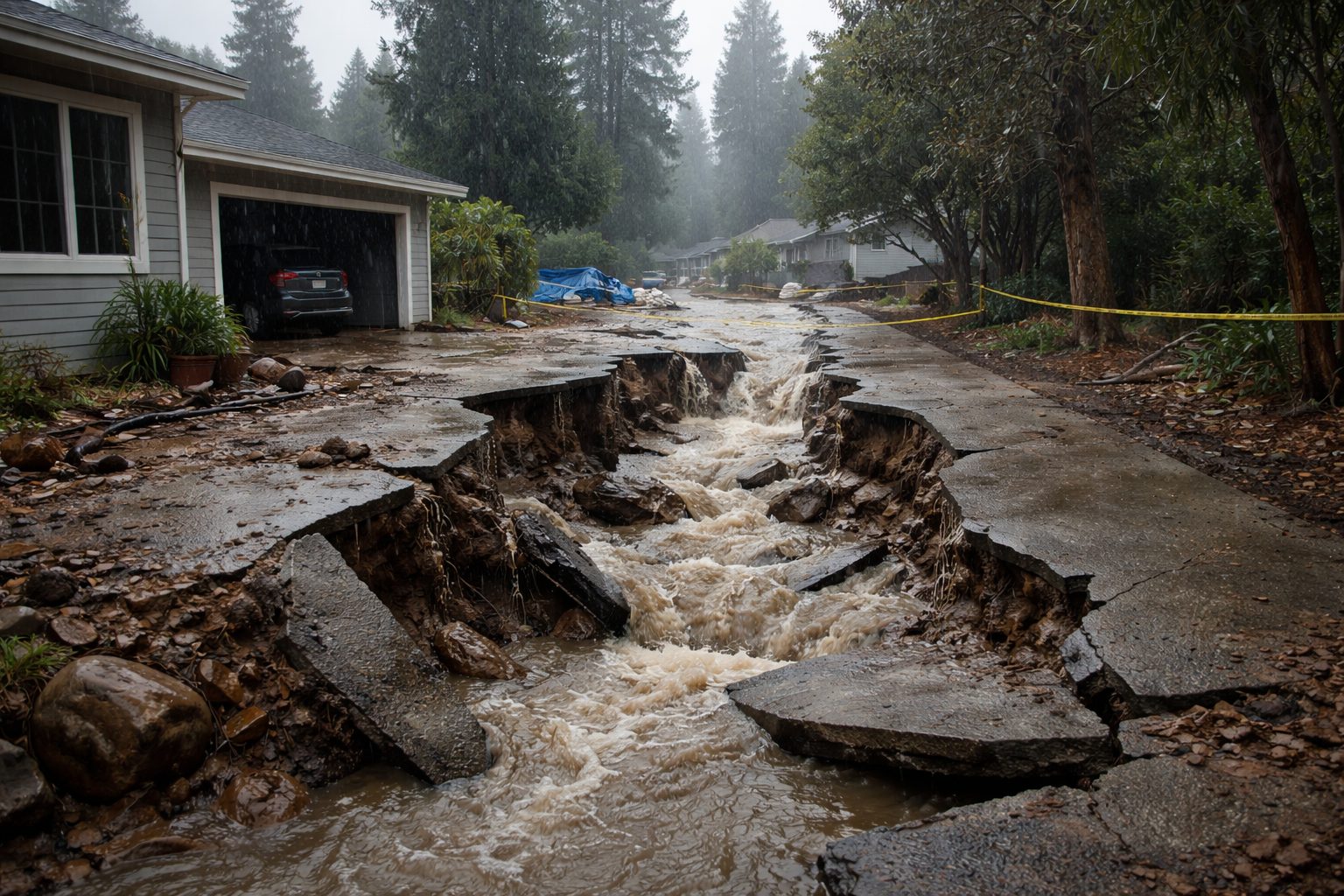
In December 2025, Atmospheric rivers left a trail of destruction across California’s Central Coast, from flooded homes and businesses to mudslides and overwhelming debris damage.
Betz Works was there for residents of Santa Cruz and Monterey Counties, helping our neighbors to repair their damaged driveways, parking lots, and eroded surfaces.
In this guide, you’ll learn how atmospheric rivers affect asphalt surfaces, what steps to take if a storm damages your driveway, and how to protect your property in the future.
Key Takeaways
- Atmospheric rivers damage asphalt by saturating the layers under it, overwhelming the drainage systems, and leading to erosion, landslides, potholes, cracking, and weakened structure.
- Take action after a storm hits your driveway: clear away debris, inspect for cracks and pooling water, patch small issues temporarily, improve your drainage system, and keep watching for worsening damage.
- Call Betz Works for professional repairs after storm damage or preventive solutions that make your driveway more resilient to future weather events.
Atmospheric Rivers in California: What You Should Know
Atmospheric rivers are long, narrow bands of moisture that travel through the atmosphere, carrying large amounts of water vapor from the ocean toward land.
Once these systems make landfall in California, they can unleash heavy rain or snowfall in a short period of time.
The Central Coast’s mountainous terrain, urban development, and wildfire-scarred areas make communities particularly vulnerable to flooding, landslides, and road damage when these intense storms arrive.
In the days leading up to Christmas 2025, the National Weather Service in Los Angeles issued a flash flood warning due to a series of atmospheric rivers that unleashed flooding, mudslides, and more through the early part of January 2026.
These rivers caused floods, mudslides, and other disasters that tragically claimed at least one life.
Betz Works worked with countless homeowners in the days that followed, repairing cracked driveways, damaged retaining walls, erosion issues, and other problems caused by these catastrophic events.
How These Storms Damage Asphalt Surfaces
Overwhelmed Drainage Systems
The drainage system under and around your driveway plays an important role in keeping it safe and functional.
Atmospheric river storms often overwhelm the drainage systems, leading to water running across your pavement, weakening it over time.
Additionally, water can pool on your asphalt, accelerating wear and eroding the subgrade.
Soil Saturation and Subgrade Failure
Surface problems aren’t the only issue caused by atmospheric rivers.
Heavy rain or snowfall can weaken the soil, which leads to subgrade shifting, gravel loss, and other problems that weaken your asphalt or cause it to shift.
Erosion or Washouts
Many of the homes in our area are built on hillsides, which leads to sloped driveways.
Unfortunately, this makes soil, gravel, and other sublayers more prone to erosion, especially if the slope was not properly graded.
Entire sections of your road may get washed away during heavy precipitation.
Even if that doesn’t happen, mud, rocks, and logs carried away by runoff can damage or obstruct driveways and roadways.
Landslides and Debris Flows
Highway 1 and other coastal routes are prone to landslides and debris flows that bury or destroy roads and driveways.
Depending on the severity of the slide, a full rebuild may be necessary.
Potholes, Cracks, and Structural Breakdown
Constant moisture on the surface can wear away your asphalt binders, leading to cracks in the surface.
Meanwhile, saturation in the underlying materials produces potholes.
When an area doesn’t have time to dry out, the damage can quickly compound. If this happens, you may need to replace your driveway.
Infrastructure Not Built for Modern Storms
The roads and driveways that you drive on every day were probably built decades ago, based on the historical weather data that engineers had at the time.
As the climate has continued to change and storms become more intense, many of the existing roads and driveways in our region struggle to keep up.
Steps to Take if a Storm Damages Your Driveway
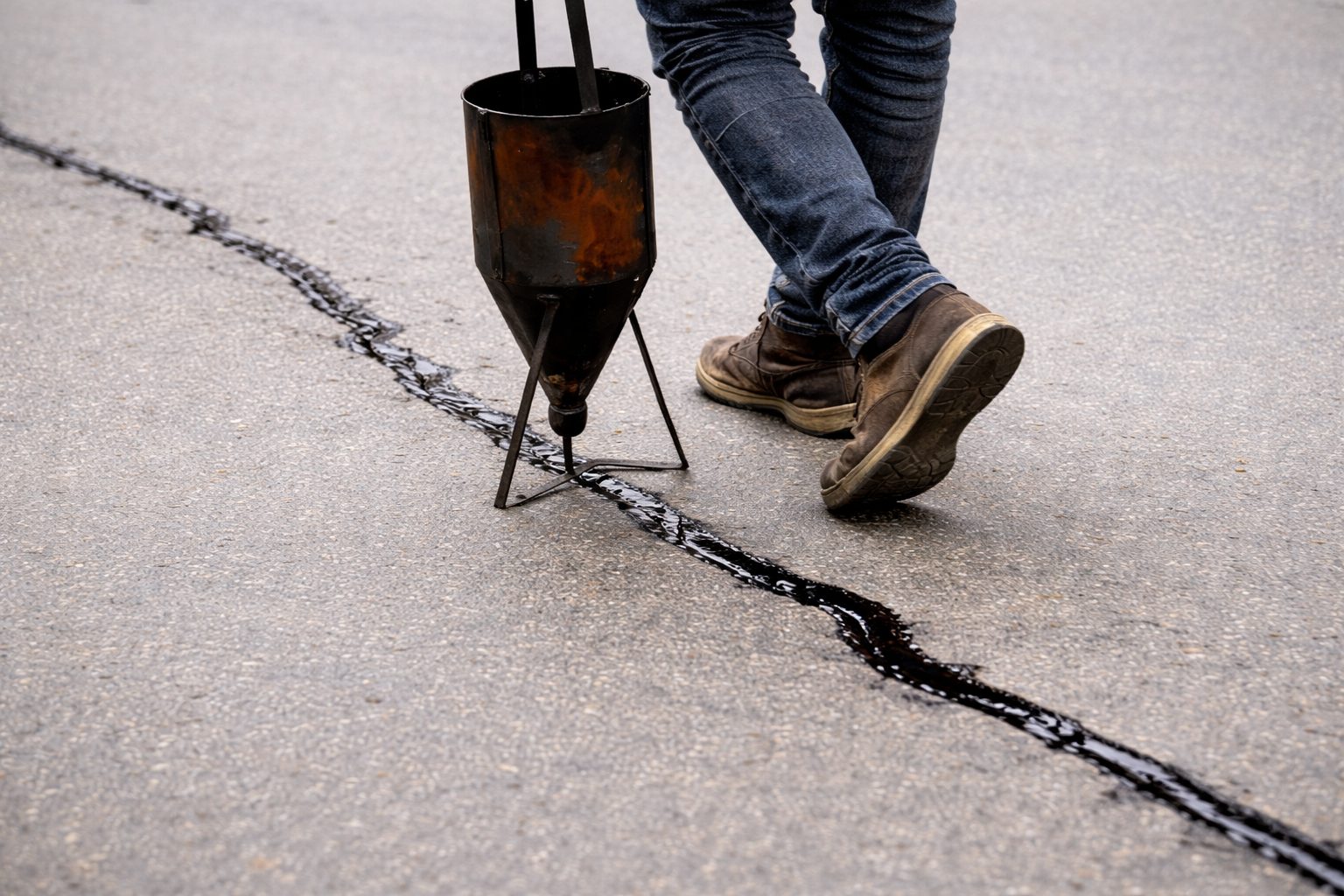
When a storm damages your driveway, you must act fast.
There are some problems that you may be able to resolve on your own, while others require the help of paving professionals.
1. Clear the Area
Clear the debris that you can safely remove from the surface.
This includes sweeping away small rocks, sticks, and mud. Rinse away light dirt to make cracks and other damaged areas more visible.
2. Inspect the Damage
Wait until it’s safe and dry before you assess the damage to your driveway.
Look for:
- cracks
- areas with pooling water
- potholes
- signs of erosion
Take clear photos of these damaged areas, especially if you plan on filing a claim with your insurance company.
3. Fix Minor Issues
You can find cold-patch asphalt or crack filler at virtually any hardware store.
Fill in small cracks or shallow potholes to prevent water from seeping in.
While this is a temporary fix for minor damage, it can allow you to get back to using your driveway.
However, if DIY repairs aren’t your specialty, contact Betz Works for all of your repair needs.
4. Improve Drainage
If necessary, take some steps to improve drainage. This can include cleaning out gutters and downspouts.
Depending on the layout of your property, consider using sandbags to divert water away from your driveway.
5. Monitor for Worsening Issues
Storm damage can keep spreading even after the rain stops falling.
Keep an eye on the damaged areas for a couple of weeks to make sure that things aren’t getting worse.
6. Call Betz Works
If you notice shifting, structural damage, and deep cracks, it’s time to call in the pros from Betz Works.
We offer free estimates and full-service asphalt repair, grading, driveway reconstruction, and erosion control.
Call us today to find out more about how we can help: 831-400-8466
How to Protect Your Asphalt from the Next Storm
- Make sure that your driveway has the proper drainage to direct water away from it.
- Seal cracks while they’re still small, and have your driveway resealed every few years.
- Avoid paving just before a storm to ensure the asphalt cures properly.
- Use landscaping that is erosion-resistant to stabilize the soil near your pavement.
- When the storm passes, carefully inspect your asphalt for signs of damage.
Dealing With Driveway Damage After an Atmospheric River? Betz Works Can Help!
We’ve seen how devastating atmospheric river damage can be, from cracked asphalt, flooded properties, to severe erosion that leaves Central Coast homeowners and businesses reeling.
You don’t have to face this alone. Our team is ready to restore your property with emergency storm repair services you can trust.
Contact us today for a free assessment: 831-400-8466
FAQs
Can insurance cover storm damage to my asphalt?
Insurance policies typically cover storm damage to driveways caused by sudden, accidental events such as flooding, mudslides, and falling trees.
It’s best to contact your insurance company to find out if your policy covers driveway repairs.
Do I need to replace the whole driveway after storm damage?
Depending on the severity of the damage, you may need to fully replace your driveway after a storm.
Betz Works can help you make the right choice and will provide a free estimate.
Are atmospheric rivers becoming more severe?
Yes, they are. Experts agree that atmospheric rivers are becoming stronger and more frequent due to climate change.