

Summer heat, winter rain, and coastal salt air affect asphalt and concrete in completely different ways.
With decades of paving experience across the Central Coast and in the South Bay, our team here at Betz Works understands how both materials hold up against our unique climate year after year.
In this blog, we’re sharing what we know about these materials so you can choose the one that’s best for your driveway.
Key Takeaways
- Asphalt is your overall best bet if you need a resilient, cost-effective driveway that won’t crack under summer heat or crumble from winter moisture.
- Concrete is a good option if you want maximum design flexibility and you’re okay with higher installation costs and expensive crack repairs down the line.
- Reach out to our team at Betz Works if you’re thinking of getting an asphalt driveway – we’ll provide you with a fast, free quote: 831-400-8466
Asphalt vs Concrete Driveways: A Quick Comparison
Category | Asphalt | Concrete |
Cost | Lower initial investment | Higher upfront cost |
Durability | Strong with proper maintenance; handles Central Coast weather well | Very durable, but can crack under extreme temperatures |
Maintenance | Sealcoating every 3-5 years; easy crack repairs | Periodic sealing; more expensive repairs for cracks |
Lifespan | 20-30 years with regular maintenance | 30-50+ years |
Appearance | Classic black finish; can be stamped or sealed for variation | Customizable with colors, patterns, and textures |
Installation | Quick installation; ready to use in 1-2 days | Longer cure time, approximately 1 week |
What is an Asphalt Driveway?
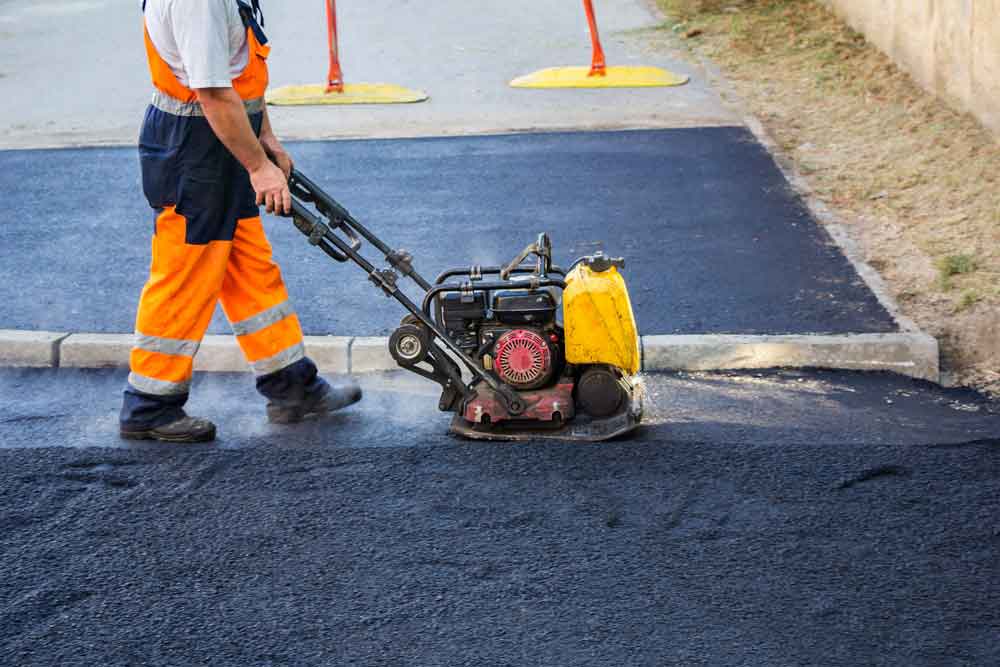
Asphalt is a petroleum-based paving material that creates a smooth, durable surface for your driveway.
Central Coast homeowners choose it more than any other material because it’s an affordable option, handles our weather well, and is relatively easy to maintain.
Main Characteristics
Asphalt driveways consist of aggregate materials like gravel and sand held together by bitumen, a sticky petroleum derivative that creates a flexible, weather-resistant surface.
The specific mix can be adjusted based on your local climate and expected traffic, which is why experienced contractors can fine-tune the formula for Central Coast conditions.
Cost
You’ll pay significantly less upfront for asphalt compared to concrete.
Asphalt paving costs vary based on project size, complexity, and material prices.
You’ll typically pay $3 to $5 per square foot for standard asphalt paving, though costs can reach $7 per square foot if your project needs extra prep work or custom finishes.
Durability
Asphalt flexes with temperature changes rather than cracking like rigid materials do.
This flexibility makes it ideal for areas like the Central Coast, where summer heat and winter moisture create constant expansion and contraction.
With regular maintenance, your asphalt driveway will handle heavy vehicles and daily wear without deteriorating.
Maintenance
Plan to sealcoat your driveway every 3-5 years to protect it from water damage and UV rays.
Small cracks are easy and inexpensive to patch yourself or through a quick professional visit, preventing minor issues from becoming major problems.
Lifespan
Expect 20-30 years from a properly installed and maintained asphalt driveway.
You can make it last even longer by sealcoating regularly and repairing cracks promptly, giving yourself decades of reliable service.
Appearance (Curb Appeal)
Asphalt delivers a classic, clean black finish that complements most home styles and looks sharp when freshly sealed.
If you want something more distinctive, stamped asphalt (like StreetPrint) uses advanced coating technology to create textured patterns that mimic brick, cobblestone, or decorative pavers while keeping the asphalt flexible and durable.
It gives you the decorative look of concrete or stone without the cracking issues.
Installation
Asphalt installation is straightforward and weather-flexible.
Your contractor will prepare and grade the base, lay the asphalt, compact it, and you can typically drive on it within 24-48 hours. No week-long waiting period required.
Pros
- You’ll save money both upfront and over time with lower installation costs and affordable repairs.
- Your driveway will flex with Central Coast temperature swings instead of cracking under stress.
- Maintenance is simple and inexpensive, with sealcoating every few years to keep it looking and performing like new.
- You’re back to normal life faster with an installation that takes hours, not days.
Cons
- Sealcoating is necessary every 3-5 years to maintain protection and appearance.
- Asphalt can soften slightly during extreme heat, though this rarely causes issues with normal use.
Best for:
Asphalt is your best choice if you want a durable, low-maintenance driveway that handles Central Coast weather without breaking your budget or requiring constant upkeep.
What is a Concrete Driveway?
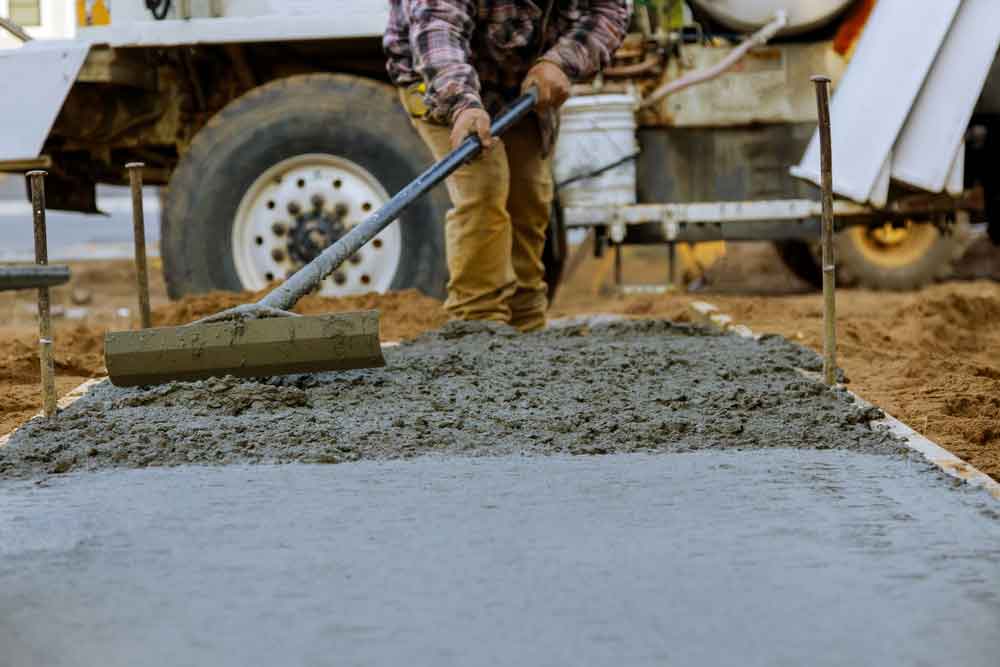
Concrete is a rigid paving material that comes in a wide variety of design options, which is why many homeowners choose it when appearance matters most.
Main Characteristics
Concrete driveways are made by mixing cement (the binding agent), aggregates like gravel or crushed stone for stability, and water that triggers a chemical hardening process.
Additives can be included to improve workability or crack resistance, though the basic formula creates a strong, rigid surface that doesn’t flex with temperature changes.
Cost
Concrete requires a higher upfront investment than asphalt.
Material costs are greater, and the labor-intensive installation process with precise leveling and extended curing time adds to the expense.
Expect to spend $8 to $20 per square foot on your concrete driveway, with costs varying based on size, finish options, and whether you need extra thickness for heavy vehicles like RVs.
Durability
Concrete offers high compressive strength and can handle heavy vehicles when properly installed.
However, its rigid nature makes it vulnerable to cracking under severe temperature swings or ground movement, especially in climates with significant seasonal variation like the Central Coast.
Maintenance
You’ll need to seal concrete every few years, depending on your climate, to prevent moisture penetration and staining.
When cracks appear, you’ll need to hire professionals with specialized equipment, which is more expensive and complicated than asphalt repairs.
Lifespan
A well-installed concrete driveway can last 30-50+ years. However, this longevity assumes minimal cracking and proper maintenance in stable soil and climate conditions.
Appearance (Curb Appeal)
Concrete gives you the most design flexibility with options for colors, stamped patterns, textures, and finishes that can mimic natural stone or brick.
The light gray surface can be customized to match your home’s aesthetic, making it ideal when curb appeal is your priority.
Installation
Plan on ideal weather conditions and thorough preparation when you install concrete.
After pouring and finishing, you’ll wait approximately one week before you can drive on it while it cures and reaches full strength.
Pros
- You get extensive design options with colors, patterns, and textures for maximum curb appeal.
- The surface can last 30-50+ years with proper installation and ideal conditions.
- It handles heavy loads well when the foundation is stable.
Cons
- The rigid surface cracks more easily under temperature extremes and ground movement common on the Central Coast.
- Repairs are expensive and require professional equipment, turning minor issues into costly fixes.
- You’ll pay significantly more upfront and wait longer before using your driveway.
Best for:
Concrete works well if you’re prioritizing decorative looks for low-traffic areas like patios or walkways, where you can commit to regular sealing and are okay with higher costs for aesthetic customization.
How Do I Choose the Right Material for My Driveway?
Choosing between asphalt and concrete comes down to understanding your specific situation.
Here’s how to make the decision that works best for your property:
1. Define Your Priorities
Start by asking yourself what matters most.
If keeping upfront costs low and making repairs simple is your priority, asphalt gives you both.
If you’re willing to pay more initially for decorative options and don’t mind higher repair costs down the line, concrete might appeal to you.
Think about whether you value practical durability or visual customization more.
2. Think About Your Location
Central Coast and South Bay weather plays a huge role in how your driveway performs.
Our summers cause materials to expand, while winter rains and coastal moisture create contraction.
Asphalt’s flexibility handles these temperature swings without cracking, which is why it’s the dominant choice in our area.
If you’re near the coast, salt air can be particularly hard on concrete’s rigid surface. Homes on slopes also benefit from asphalt’s superior drainage and grip.
3. Evaluate Your Usage
Consider how you’ll actually use your driveway.
Daily family traffic, occasional guests, and regular parking are no problem for either material.
If you regularly park work trucks, RVs, or trailers, asphalt’s flexibility prevents the stress cracks that rigid concrete develops under point loads.
Light traffic on a decorative walkway or patio is where concrete can work well.
4. Consider Long-Term Maintenance
Asphalt needs sealcoating every 3-5 years, but it’s an affordable process that prevents bigger problems. Small asphalt repairs are DIY-friendly and inexpensive.
Concrete requires periodic sealing, too, but when cracks appear, repairs are expensive and often require professionals with specialized equipment.
5. Factor in Your Timeline
If you need your new driveway to be functional quickly, asphalt wins. You’ll be driving on it within 24-48 hours after installation.
Concrete requires about a week of curing before it’s ready for vehicles, which can complicate your daily routine during installation.
6. Set a Realistic Budget
Look beyond the sticker price. Include site preparation, proper drainage, and long-term maintenance in your calculations, not just the cost of material.
Asphalt costs less upfront and less to maintain over its lifetime.
Concrete’s higher initial cost is just the beginning when you factor in expensive crack repairs and potential replacement if the foundation shifts.
7. Check Local Regulations and HOA Guidelines
Some neighborhoods have specific requirements about driveway materials, colors, or finishes.
Check with your HOA or local building department before making your final decision.
8. Contact Betz Works for a Consult
A contractor who knows Central Coast conditions, such as Betz Works, can assess your specific property and give you honest recommendations.
Soil type, drainage patterns, sun exposure, and slope all affect which material will perform best at your home.
Betz Works: Your Source for Reliable Asphalt Paving Services
At Betz Works, we’ve been paving and repairing asphalt driveways across Santa Cruz, Monterey, and Santa Clara Counties for decades.
We know exactly how asphalt performs in your neighborhood and can help you choose the solution that fits your site, budget, and goals.
Reach out any time, and we’ll be happy to take a look at your property and help you figure out the best path forward!
FAQ
1. What is the best material to use on a driveway?
The best material for a driveway is asphalt. Asphalt has excellent durability and can withstand heavy loads, making it perfect for driveways where cars will be constantly driving and parking.
Additionally, asphalt is resistant to extreme weather conditions, such as freezing temperatures and heavy rain, which can damage other materials like concrete.
Another advantage of using asphalt on a driveway is its ability to quickly melt snow and ice. This is due to the dark color of asphalt, which absorbs heat from the sun and helps in melting any frozen precipitation on the surface, making it safe for vehicles to drive on.
Asphalt also provides a smooth and seamless finish with no joints or seams that can shift or crack over time. This not only enhances the overall appearance of the driveway but also reduces the risk of tripping or falling for people walking on it.
In terms of maintenance, asphalt is relatively low-maintenance compared to other materials like concrete. If any cracks or potholes do appear over time, they can easily be repaired by filling them with new asphalt without having to redo the entire driveway.
Asphalt is also a recyclable material that can be reused multiple times, reducing its carbon footprint and saving resources. Its porous nature allows water to seep through instead of pooling on top, allowing for better drainage.
2. How can you tell if you have an asphalt or concrete driveway?
There are a few ways to determine if you have an asphalt or concrete driveway:
- Color: Asphalt driveways are typically dark black in color, while concrete driveways can range from light gray to beige.
- Texture: Asphalt driveways have a smooth, flat surface, whereas concrete driveways may have a slightly textured or rough surface.
- Sound: When driven on, asphalt driveways tend to be quieter than concrete driveways, which can produce a loud rumbling noise.
It is important to note that the only sure way to determine the type of driveway you have is to consult your builder or check the records of your home’s construction.
If you are unsure about the type of driveway you have, contact a professional for assistance.
3. How long does it take to install an asphalt or a concrete driveway?
The time it takes to install an asphalt or concrete driveway can vary depending on various factors, such as the size of the driveway, weather conditions, and the experience of the contractors.
The installation process generally takes a few days to complete. However, it may take longer for larger driveways or more complex projects.
It is best to consult with a professional contractor to get a more accurate estimate for your specific project.
4. Can I do my own asphalt or concrete driveway installation?
Possibly, but it depends on your level of experience and expertise with concrete or asphalt installation.
If you’re handy and comfortable using the tools needed to install asphalt, you may be able to do it on your own. If you’re not familiar with the process, though, we recommend that you hire a professional contractor.
Asphalt and concrete driveway installation require specific tools, skills, and knowledge to ensure a proper and long-lasting result.
Without the necessary equipment and expertise, the project can become challenging and may result in costly mistakes. Moreover, improper installation can lead to cracks, uneven surfaces, and other structural issues that could potentially damage your property.
Hiring a professional contractor not only ensures a high-quality job but also saves you time and effort.
They have the necessary resources and experience to handle the project efficiently and effectively.
Additionally, they can provide expert advice on choosing the right materials for your driveway installation based on your budget, location, and specific needs.
5. How often should you apply a sealer to an asphalt driveway?
It depends on factors such as climate, usage, and the overall condition of the driveway. However, a general rule of thumb is to reapply a sealer every 2-3 years.
This will help protect your driveway from harsh weather conditions and maintain its appearance.
It’s also important to regularly clean and inspect your driveway for any cracks or damage and seal them appropriately before reapplying the sealer.