
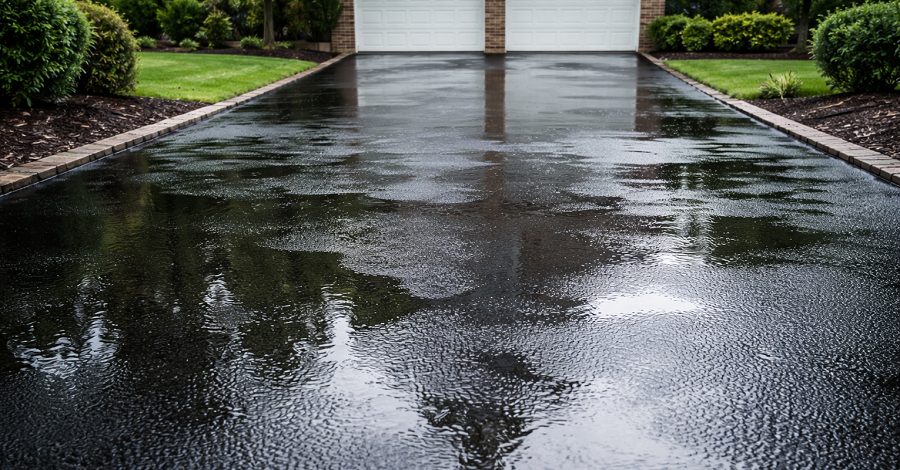
Water pooling on your asphalt driveway isn’t just a nuisance – it’s a sign that something went wrong during installation.
At Betz Works, we’ve installed and repaired countless asphalt roads along California’s Central Coast, and have seen firsthand what causes drainage issues and how to fix them.
This guide explains why there is standing water on your driveway and steps to take to fix the problem.
Key Takeaways
- Most pooling issues come down to six common culprits: the asphalt hasn’t finished curing, the slope is off, there are dips in the surface, the base wasn’t prepped correctly, water from elsewhere is draining onto your driveway, or the soil underneath is completely saturated.
- If you notice drainage issues on your driveway, start by checking where the puddle is forming and whether it drains toward your home, measure how deep it is, take clear photos of the puddles, and then contact the original contractor to inspect the problem and repair it.
- If the original contractor won’t take responsibility or you’re not comfortable moving forward with them, reach out to an experienced paving professional like Betz Works to identify the cause of the pooling and make the necessary repairs.
What Causes Water to Pool on New Asphalt?
1. Incomplete Curing and Surface Tension
Asphalt can usually withstand light vehicle traffic within 72 hours, but it can take 6 to 12 months for your new asphalt driveway to cure completely.
Natural oils and binders rise to the surface when pouring asphalt, which makes water bead up instead of running off.
This surface tension effect is common in the first few weeks after paving, when the asphalt is still curing and hardening.
Because of this, you may notice light or shallow pooling after rain, even if the driveway has proper grading.
2. Improper Grading or Slope
The slope of your residential driveway should be at least 2% so water can drain correctly.
Even a slight but consistent pitch makes a significant difference in how effectively water runs off.
If a driveway is too flat or, worse, has areas with a reversed slope, water has nowhere to go.
Instead of draining away, it collects in low spots and lingers on the surface.
Over time, this standing water can weaken the asphalt, accelerate wear, and lead to premature cracking or base damage.
3. Low Spots and Depressions
Low spots and depressions can form because of imperfections in the asphalt. Settling and shifting in the soil also causes them.
These areas may not be obvious at first glance, but they become noticeable after rainfall when water collects in the same location repeatedly.
Even on a properly sloped driveway, a single depression can interrupt the natural flow of water.
Instead of continuing downhill, water settles into the dip and creates a small pool that lingers long after the rest of the surface has dried.
4. Inadequate Base or Subgrade Preparation
A strong driveway starts beneath the surface. If the base or subgrade isn’t properly compacted before paving, the asphalt above may settle unevenly.
Poor compaction allows certain areas to compress more than others over time, creating soft spots and subtle dips that were not present immediately after installation.
When the surface shifts along with the sublayer, uneven areas start trapping water.
Beyond the cosmetic issue, settling creates a real long-term risk. Standing water works its way into the pavement layers, weakens the base, and speeds up cracking and premature failure.
5. External Drainage Issues
The areas around your driveway also impact how well it drains.
Things like clogged gutters, landscaping slope, and the terrain around the driveway can all cause water to run onto the asphalt.
These external sources add to the pooling problem.
While your driveway’s slope should allow rainwater to run off, when it faces water from other places, even a well-sloped driveway struggles to shed water.
6. Heavy Rainfall or Saturated Soil
Severe storms, prolonged rainfall, or a high water table can overwhelm even a properly installed driveway.
When the surrounding soil becomes saturated, it cannot absorb additional water, which slows drainage and increases surface runoff.
In these conditions, water may temporarily pool on the driveway simply because the ground beneath and around it has reached capacity.
This is even more common with new asphalt that hasn’t had time to cure completely.
Even with correct grading and a solid base, extreme weather can cause short-term pooling that resolves once the soil dries and normal drainage resumes.
When Pooling is a Real Problem
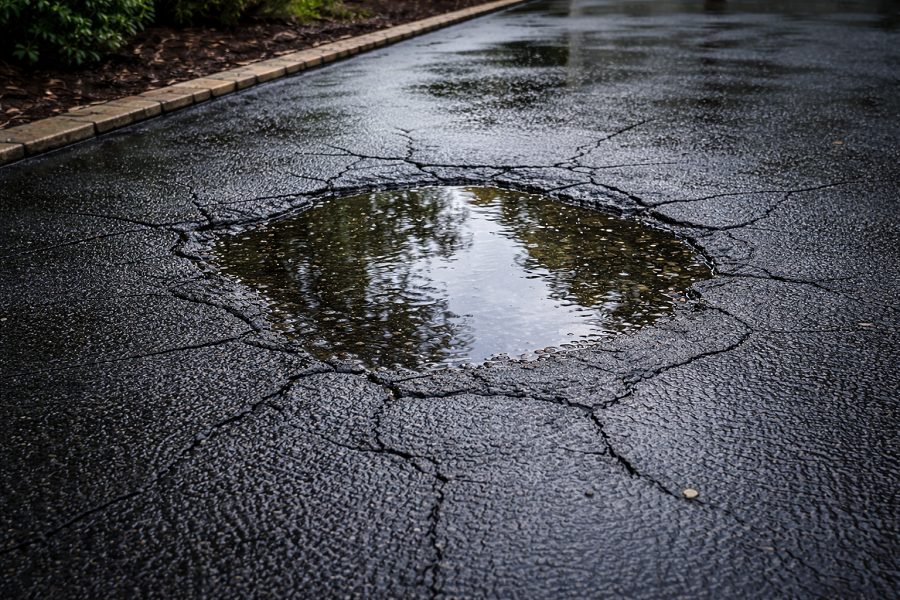
Water that stands on your driveway in the hours after a storm isn’t much of a concern.
However, in some instances, pooling water is a serious problem.
Look out for these red flags that your water-pooling issue isn’t something minor:
- Water standing for more than 48 hours: If water consistently sits on the surface long after rain has stopped, it may indicate improper grading or a low spot that will not resolve on its own.
- Water pooling in the same spot every time: Repeated pooling in one area often points to a depression or settling issue rather than temporary surface tension from new asphalt.
- Soft or spongy areas: If you notice soft, spongy ground when you walk across your driveway, the moisture problem goes far beneath the surface.
- Cracking or deterioration: A new driveway shouldn’t crack or show signs of damage for at least five years. Early signs of damage point to issues with the asphalt or the subsurface.
- Pooling near the foundation or garage: Water that drains toward your home instead of away from it can damage not only your driveway, but also the house foundation.
What To Do Next
1. Observe and Wait
If your driveway is less than a month old, monitor puddles for a few days.
If they go away after two or three days, you likely have nothing to worry about. Generally, temporary surface pooling on a new driveway clears up on its own.
If the puddling persists, you may have a problem.
2. Measure the Puddles
Use a ruler or a straightedge to measure the depth of the puddles.
Puddles that are more than ¼” deep and last for more than 24 hours may indicate a draining or grading problem.
3. Take Notes and Photos
Documentation is helpful if you call a paving contractor.
Record the depth of the puddle each time you measure. Take photos to document how the puddle shifts or shrinks over time.
4. Check Drainage Flow
See if the water runs off the driveway and toward your home or garage. Prolonged exposure to water can threaten the structural integrity of the building.
If water flows toward the foundation, you need to act quickly to avoid structural issues.
5. Contact the Contractor Who Installed the Driveway
If you had your driveway installed recently, contact the contractor who installed it.
Many professionals offer warranties on their work that last anywhere from a few months to a year.
Be sure to provide photos, notes, and any other documentation that details the drainage issues so the contractor can better understand how to resolve them.
6. Consult a Paving Professional
If the original contractor denies any responsibility, or if you’re unsure about trusting them again, consult paving professionals like Betz Works.
Our experts will help you determine exactly what’s wrong and recommend long-term fixes, such as grading, patching, or improving drainage.
Dealing With Drainage Issues on Your Driveway? We Can Help!
If you’re seeing water pooling on your new asphalt driveway, don’t ignore it.
Address the drainage issues early to protect your investment and ensure your driveway lasts for years to come.
Our team has years of experience installing and repairing driveways in Santa Cruz and Monterey Counties, as well as the South Bay.
Contact us today to find out more about how we can help you: 831-400-8466
FAQs
How long does it take for a new asphalt driveway to fully cure?
It can take anywhere from 6 to 12 months for an asphalt driveway to fully cure. However, you can still drive your vehicle across the driveway after 48 to 72 hours.
Can standing water damage my driveway?
Yes, it can. Standing water can seep into the asphalt, weakening its structural integrity.
What does a bad asphalt job look like?
There are some signs of a bad asphalt job that are quickly evident.
Inconsistent thickness and poor transition from the driveway to the road are some indicators that you may notice immediately.
Some signs don’t show up right away, like cracking edges and pooling water, so keep an eye on your driveway over time and contact a paving professional if you notice these issues.