

The Central Coast’s excessive moisture, salty air, dense fog, and unique soil conditions all affect how pavement holds up over time, and not every contractor knows how to work with them.
Hiring the wrong contractor – someone without local experience, who cuts corners on materials, skips proper site prep, or isn’t fully licensed and insured – can cost you thousands in repairs or premature replacements down the road.
The good news? Asking paving contractors the right questions upfront tells you everything you need to know about their experience, qualifications, and whether they’re the right fit for your project.
Key Takeaways
- Before you hire a paving contractor for your next project, ask them about their qualifications and experience, how they handle the Central Coast’s unique climate conditions, the materials and methods they use, a detailed estimate with a breakdown of project costs, how long the project will take, and the warranties and aftercare they provide.
- If you’re looking for a paving contractor with local experience, proper licensing and insurance, quality materials, and workmanship they stand behind, contact Betz Work today for a free quote: 831-400-8466
Ask These Questions Before Choosing a Paving Contractor
1. Are you licensed and insured in California?
This is an important first question, as any contractor should be willing to show proof of licensure and insurance.
Contractors who say they aren’t licensed and insured, as well as those who refuse to provide documentation, are a financial risk for you.
If your contractor is uninsured or unlicensed, you are responsible for the cost of potential injuries and property damage.
2. Are you familiar with Santa Cruz County permit requirements?
A good paving contractor should be familiar with Santa Cruz County’s permitting process and ready to handle any necessary paperwork for your project.
Without these permits, the city government can order you to remove and replace the driveway.
If a prospective contractor isn’t familiar with local regulations, you’re probably dealing with an inexperienced contractor, which could significantly hinder the timeline and the quality of your paving job.
3. Can you provide local references?
Reputable contractors should have no problem providing references from past customers – ideally from jobs similar to yours.
If a contractor hesitates or refuses, that’s a red flag worth taking seriously.
4. How do you deal with coastal environments?
Paving in a coastal environment requires specific knowledge of how moisture, salt air, and shifting soils affect pavement over time.
A contractor with real experience in these conditions will speak to them directly, explaining how they adjust their materials, methods, and site preparation to account for them.
While newer contractors can certainly do quality work, when you’re making a significant investment in new pavement, it pays to work with someone who has verifiable experience working in local conditions.
5. Have you worked on hillside or sandy-soil projects?
If you live in one of the Central Coast’s many hillside communities, your paving project comes with additional challenges that not every contractor is equipped to handle.
Coastal soils in this region tend to be sandy, which can cause instability in your pavement if a contractor doesn’t properly address it during grading and preparation.
Inexperienced contractors may not be familiar with working in these conditions, which can result in your driveway shifting and becoming unstable.
6. How do you schedule your paving work around the rainy season?
The rainy season in our area runs from November through April. However, the wettest months are January and February.
Rain can saturate and soften already shifting soil, making site preparation more complicated.
A good contractor will account for local weather patterns and give you a timeline that works for you without compromising the quality of the job.
7. Have you dealt with tree root damage before?
Tree roots can wreak havoc on pavement by causing the sublayers to shift, which can cause the pavement to crack.
Choose a contractor who knows how to handle salt air damage, and you could save yourself from a full replacement down the road.
8. What is your site preparation process?
Ask your contractor to walk you through their site preparation process. They should explain how they assess your property’s slope, soil conditions, and drainage, how they grade the site, and build up the sublayers beneath the pavement.
Contractors who rush or skip these steps leave you with pavement that shifts, cracks, and develops potholes over time.
9. What thickness of asphalt do you recommend?
Residential driveways typically require 2 to 3 inches of asphalt. However, there are factors that can change that.
For example, if you have multiple, large vehicles, you may need to consider 4 inches.
A good contractor will customize their approach to fit your specific project needs.
Watch out for answers that are vague or suspiciously low. If a contractor promises to cut costs by using less asphalt, your pavement will crack, crumble, and fail years before it should.
10. What asphalt mix do you use for coastal climates?
The answer to this question may give you some insight into the contractor’s experience levels with coastal climates.
Type A hot asphalt mix is typically the best mix for coastal climates. It resists rutting during warm spells and is largely resistant to moisture damage.
Contractors who are unsure, or who suggest another option, may be looking for ways to do the job more cheaply or may lack experience.
11. Will you provide a detailed written estimate?
All contractors should be willing to provide a detailed written estimate. This estimate provides accountability for the contractor while also allowing you to budget for the work by outlining how much each part of the work costs.
Contractors who refuse to provide a written estimate may try to charge you more when the job is complete.
12. What is your estimated timeline?
An estimate isn’t just about cost. It should also include a clear timeline for when the work will start, how long it will take, and when you can expect the site to be fully usable again. Knowing this upfront lets you plan accordingly, whether that means arranging alternative parking or coordinating access to your property.
Contractors who have experience dealing with local weather and soil conditions know how to build potential obstacles into this timeline.
13. What are your payment terms?
Many homeowners need financing options when it comes to large-scale paving jobs. Spreading payments over several months makes the work more affordable.
If a company refuses to offer any financing options, you may need to look for another option.
14. What warranty do you offer?
Warranties are put into place to protect your investment, and a good contractor should offer some warranty coverage on their work and the products they use.
Contractors who offer no warranty may be unwilling to stand behind their work once they complete the job.
15. What is excluded from the warranty?
Make sure that you’re getting a warranty that covers multiple things. For example, a good warranty should cover labor and materials.
These details are the difference between you assuming financial responsibility for repairs and having them covered by the warranty.
16. How should I maintain my new pavement?
A good contractor will provide you with some tips on how to maintain your new pavement.
They will also offer some aftercare options, such as professional sealing, that can protect the surface.
Looking for a Reliable Paving Contractor on the Central Coast? Call Betz Works.
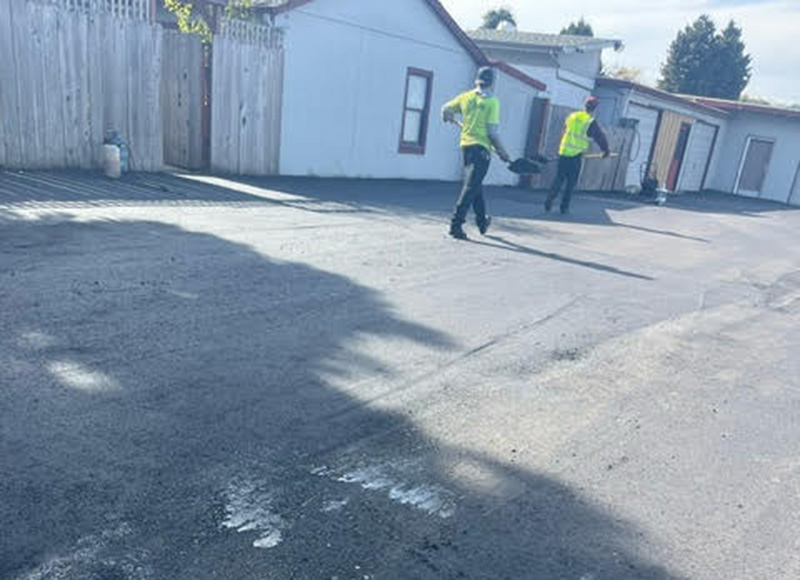
When you ask Betz Works these questions, you’ll get the answers that offer peace of mind about financing, quality of work, experience, and more.
We’ve spent more than 60 years providing homeowners and businesses along the Central Coast with quality paving solutions.
Call Betz Works today at 831-400-8466 to start your paving project.
FAQs
Should I hire a local contractor or a larger regional company?
A local contractor is more likely to understand the specifics about your property and how to pave it.
Betz Works is a locally-owned and operated company that has been serving Santa Cruz County for decades, bringing deep knowledge of the region’s climate, soil conditions, and permitting requirements to every project.
How do I recognize a bad asphalt job?
Some signs of a bad asphalt job include:
- Cracks forming across the asphalt surface or along the edges
- Sinkholes or soft spots developing in your driveway pavement
- Edges that slope, crumble, or pull away from the surrounding surface
- Puddles forming on your driveway after rain due to poor drainage
- Warping or rutting on your driveway surface from inadequate base preparation
How do I verify a paving contractor’s license?
You can use the CSLB Instant License Check portal to verify a paving contractor’s license in California.